Before it was a hoodie, it was a way to disappear.
For about three hundred years the women of the Azores left the house under the capote e capelo: a wool cloak down to the feet, and a hood so deep you could not see the face inside. We took the name from it, and the idea.
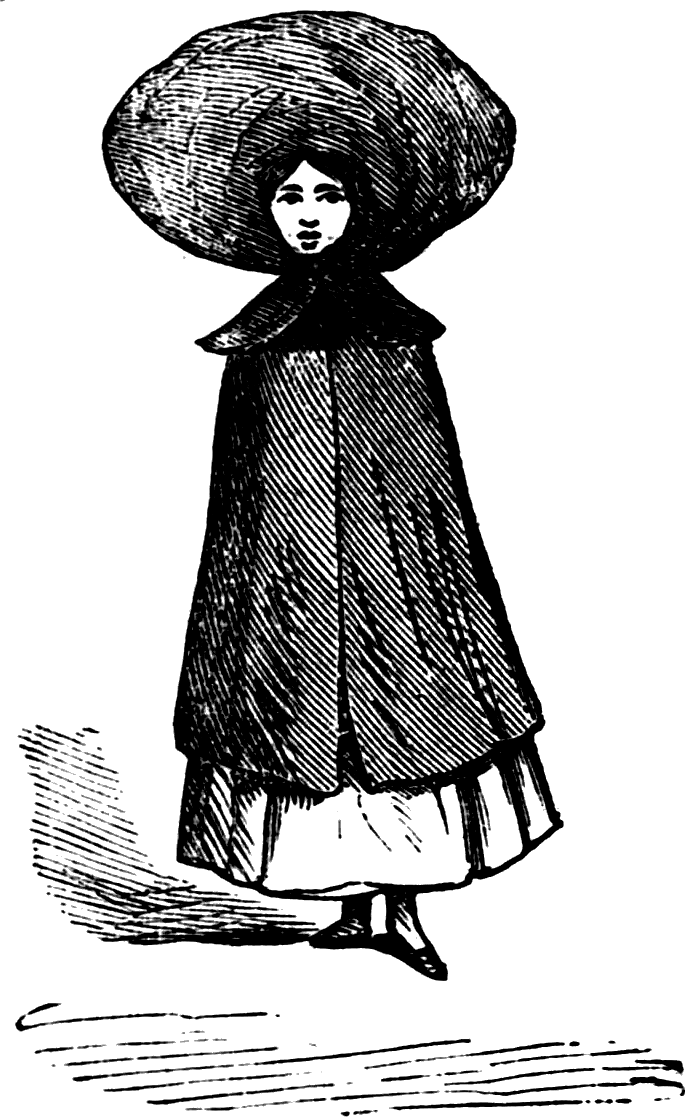
Woodcut from The Innocents Abroad, 1869.
1450
Flemish settlers land in the Azores. Forty years later there are two thousand of them and people call the islands the Isles of Flanders. Some historians say the hooded cloak came with them. Others trace it to seventeenth-century fashion on the mainland, or to Moorish dress. The women who wore it never wrote any of this down.
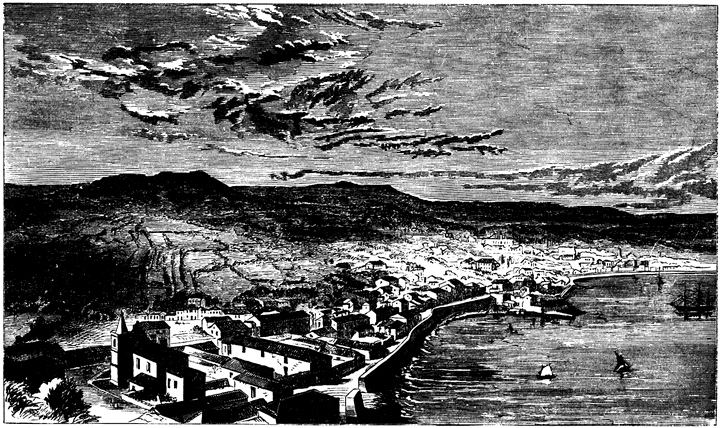
Horta, Faial, 1869.
Two pieces
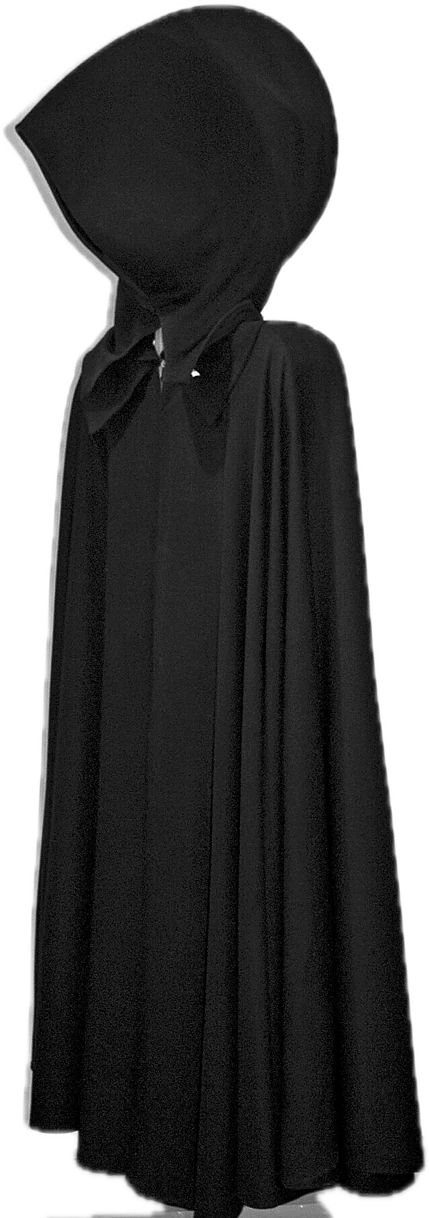
The capote is a heavy wool cloak from the shoulders to the feet. The capelo is the hood. Tailors built it over an arch of whalebone and lined it with hemp so the wind could not fold it. They dyed both pieces close to black, or the deep blue of the woad the islands grew for export.
Museu Carlos Machado, Ponta Delgada.
Faial
Each island cut it differently. On Faial the hood reached forward more than a hand's length, so nobody could see the face from the side. On São Miguel the cloak was longest. On Terceira the hood hung down the back, and women wore a different cloak they called the manto.
What it was for
Women wore it to Mass, to processions, and to anything that mattered. Mothers passed it to daughters, and it went into every bride's dowry. In church, the ladies in hats took the front pews and the women in capotes stood at the back. Inside it a woman could walk across town, meet whoever she meant to meet, and nobody would know her.
1869
“A marvel of ugliness. It stands up high and spreads abroad, like a circus tent.”Mark Twain, The Innocents Abroad
1930s
Travellers made fun of it. In 1926 the writer Raul Brandão still saw women in capotes at morning Mass in Horta, and called the garment a black, misshapen ghost. By the end of the decade families had folded the last ones into chests. Today you see them on folk groups and in museum cases.
Now
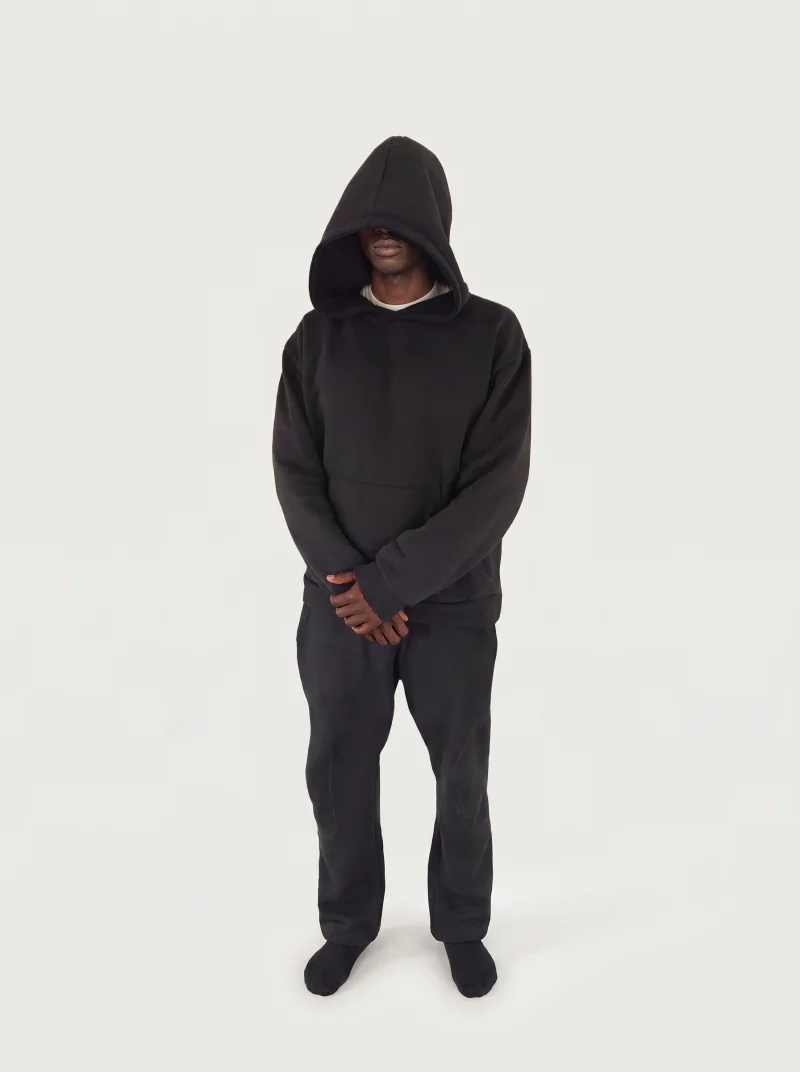
We kept the part that mattered, a hood deep enough to disappear into, and dropped the cloak and the whalebone. The fleece is heavy enough to hold the shape on its own. Where the blue used to be, we put the scribble.
Capote e capelo, and Capote.
Woodcut and view of Horta from The Innocents Abroad, 1869. Capote e capelo at the Museu Carlos Machado, Ponta Delgada, photographed by Ymblanter, CC BY-SA 4.0.
The making
Fleece
Heavyweight brushed cotton. We chose it because the hood needs weight to hold its shape.
Silver
The scribble on the back, printed from the original drawing. We did not clean it up.
Thread
The hood on the calf, in silver. The scribble on the back pocket, black on black.
Portugal
We cut, sew and embroider in small runs, and we answer every email ourselves.
 ZYNT